Jinhua Hefa Science and Technology Co., Ltd.
Jinhua Hefa Science and Technology Co., Ltd.
Automotive Valve Manufacturer Checklist for Specs and Documentation
Created on 03.16
Staying ahead in the vehicle parts industry needs a solid plan. Every part must meet strict standards for top engine performance. Our team knows how tough it is to manage all technical data for high-quality items.
automotive valve manufacturer
It's crucial for your company to keep perfect records. This ensures every piece is safe and durable. By following a simple approach, we help you handle complex rules and customer goals easily.
This guide is a helpful roadmap for your teams. We focus on improving the workflow while keeping quality at the heart of every step. We designed this checklist to keep your daily operations efficient and up-to-date with the latest laws.
Great production is more than just the final product. We aim to help you deliver components that your customers can trust with complete confidence.
Key Takeaways
- Adhere to strict engineering standards.
- Maintain precise technical documentation.
- Ensure full regulatory compliance.
- Streamline internal production workflows.
- Increase overall product reliability.
- Meet high customer safety expectations.
Why Proper Documentation Matters in Automotive Valve Manufacturing
High-quality valves come from careful documentation in every step of making them. Good documentation means every part of production, from design to delivery, is done right. This boosts the quality of the valves and makes sure they follow all rules and standards.
Accurate documentation is key for tracking each valve's history. This is important for checking quality and fixing any problems. Experts say, "Documentation is the base of a strong manufacturing process."
"The quality of a product is only as good as the documentation that supports it."
Also, detailed documentation helps teams talk clearly during production. It makes sure everyone knows the details, like what the valves should be like and how they're tested. This cuts down on mistakes that could make bad products.
In car valve making, documentation is more than just following rules. It's about making sure the valves work well and last long. Keeping records of what materials are used, how they're tested, and inspections helps ensure top quality.
We know how crucial good documentation is. It's the heart of making high-quality valves that meet customer needs and rules. By focusing on documentation, we make valves that are reliable, efficient, and up to standard.
Material Specifications and Certification Requirements
In the world of making car valves, the materials and certifications are key. They make sure the valves work well and last long. We know that custom valve solutions need special materials for different car parts.
Our precision valve engineering means picking the best materials. We look at the base materials and alloys carefully.
Base Material Standards and Alloy Compositions
Choosing the right materials is crucial for car valves. We follow strict standards for:
- Steel grade specifications
- Stainless steel and special alloy requirements
Steel Grade Specifications
Steel for valves must meet ASTM and SAE standards. We check our steel for strength, durability, and to resist corrosion.
Stainless Steel and Special Alloy Requirements
For valves that need to resist corrosion and high temperatures, we use stainless steel and special alloys. We pick these materials for their properties, making sure they meet car valve needs.
Heat Treatment and Hardness Certifications
Heat treatment makes valve materials stronger. We get hardness certifications to show our valves are up to standard.
Our heat treatment aims for the right mix of hardness and toughness. This makes our valves reliable under different conditions.
Material Test Reports and Traceability
We keep detailed reports on our materials. These reports show where each material comes from, to the final valve. This gives our customers confidence in our valves.
By following strict material and certification rules, we offer custom valve solutions that meet car industry standards.
Dimensional and Engineering Specifications Checklist
To ensure our valves work perfectly and follow industry rules, we use a detailed checklist. As a leading valve maker, we focus on precise design. This way, our products always meet top standards.
Our checklist covers all key parts of making valves. It includes important details like size tolerances, surface finish, and how well they work. These are all crucial for valves in cars to function right.
Critical Dimension Tolerances and Measurements
It's key that valves fit within set size limits to work well. We check sizes like diameter, length, and thread carefully. This makes sure they match up to the standards needed.
Surface Finish and Coating Requirements
The look and feel of a valve's surface and its coating affect its performance and life. We follow strict standards for surface finish and use the right coatings. This helps prevent rust and wear.
Valve Performance Parameters
How well a valve works depends on several factors. These include how much it can flow, its pressure handling, and how well it seals. We check these carefully to make sure our valves fit what our customers need.
Flow Rate Specifications
Flow rate is key for a valve's efficiency in different uses. We make sure our valves can handle the flow rates needed. This boosts their performance in various systems.
Pressure and Temperature Ratings
Valves need to handle the pressure and temperature of where they're used. We design our valves to meet or beat these ratings. This ensures they're reliable and safe.
Sealing Performance Requirements
Good sealing is vital to stop leaks and keep systems working right. We test and inspect our valves closely. This makes sure they meet the needed sealing standards.
Quality Control and Inspection Documentation
To ensure automotive valves are reliable and perform well, manufacturers follow strict quality control. Quality control and inspection documents are key to meeting quality and reliability standards.
First Article Inspection Reports
First Article Inspection (FAI) reports check if the first parts meet all requirements. These reports detail the inspection, including measurements and test results. FAI reports are a starting point for quality in future production.
Statistical Process Control Data
Statistical Process Control (SPC) data helps monitor and control the making process. By looking at SPC data, manufacturers spot trends and make needed changes. Good SPC use reduces variability and boosts process ability.
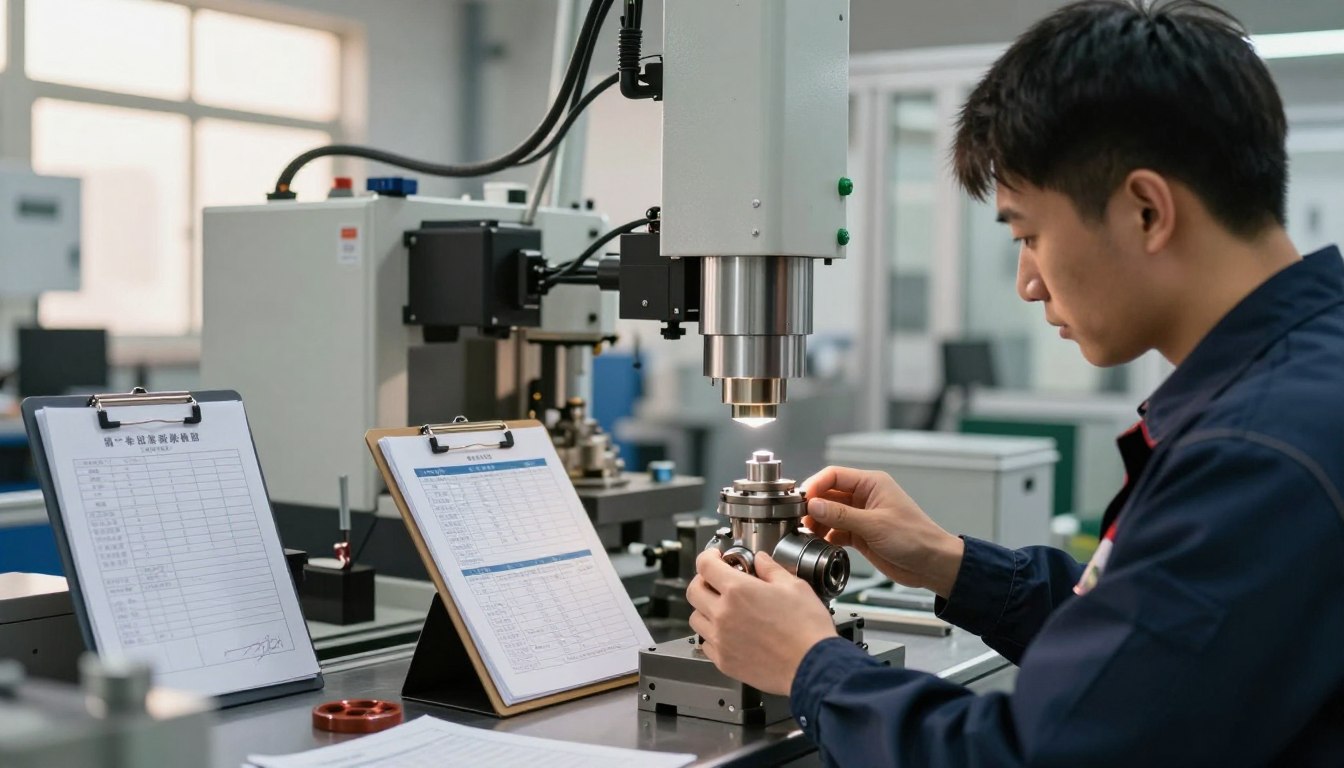
A detailed view of an automotive valve manufacturing process within a factory setting. In the foreground, showcase a precision inspection station with a technician in a professional work uniform, carefully examining a valve under bright LED lighting. In the middle ground, highlight a series of automated machines and assembly lines working seamlessly, surrounded by quality control documentation displayed prominently on a clipboard. The background features large windows letting in natural light, casting a warm glow over the entire scene. Use a shallow depth of field to sharply focus on the inspection process while softly blurring the machinery. The atmosphere is one of diligence and precision, emphasizing the importance of quality control in manufacturing.
Certificate of Conformance and Final Inspection Reports
A Certificate of Conformance (CoC) proves products meet standards. Final inspection reports give a full view of the inspection results, showing products are ready for shipping. These documents keep customer trust and follow regulatory rules.
Measurement System Analysis Documentation
Measurement System Analysis (MSA) is vital for quality control. It checks if measurement systems are accurate and reliable. MSA documents show the precision, accuracy, and stability of these systems.
"The accuracy of measurement systems directly impacts the quality of the products. Regular MSA is crucial."
Documentation Type | Purpose | Benefits |
First Article Inspection Reports | Verify initial production parts against specifications | Ensures compliance and sets a quality baseline |
Statistical Process Control Data | Monitor and control the manufacturing process | Reduces variability and improves process capability |
Certificate of Conformance | Certify products meet specified requirements | Maintains customer trust and regulatory compliance |
Measurement System Analysis Documentation | Ensure accuracy and reliability of measurement systems | Enhances product quality and reduces measurement errors |
Keeping detailed quality control and inspection records ensures our automotive valves are top-notch. This boosts customer happiness and helps our manufacturing process's reputation.
Compliance Standards Every Automotive Valve Manufacturer Should Meet
We are a leading top valve supplier and know how crucial it is to follow strict rules in the car industry. These rules help make sure our products are of high quality, safe, and reliable.
We follow several important standards that are well-known and respected in the car world.
IATF 16949 Quality Management Certification
IATF 16949 is a quality standard made just for the car industry. It focuses on preventing mistakes and always getting better at making things. Getting this certification shows we're serious about making top-notch products for the car industry.
A study found that companies with IATF 16949 certification cut their mistakes by 25%. This makes their products much better overall.
ISO 9001 and Additional Quality Standards
We also follow ISO 9001, a quality standard that's widely accepted. ISO 9001 makes sure companies have a strong quality system. This includes ways to keep getting better and making customers happy.
Following ISO 9001 has helped us make our production smoother. We've seen a 15% boost in efficiency over the last year.
Environmental and Safety Compliance
Being green and safe is key for us. We make sure our making things follows all the environmental and safety rules.
REACH and RoHS Compliance
We stick to REACH and RoHS rules to lessen our products' harm to the planet. These rules limit the use of harmful substances in electronic stuff.
For example, following RoHS has helped us make products with less harmful stuff. This meets global green standards.
Conflict Minerals Documentation
We also keep detailed records on conflict minerals. This ensures our supply chain doesn't use minerals from war zones. It's important for being ethical and following the law.
As top valve suppliers say, "Compliance audits are crucial. They help our supply chain stay honest and responsible."
Automotive Industry-Specific Requirements
The car industry has its own rules that valve makers must follow. These rules cover things like how well products work, how long they last, and how safe they are.
Standard | Description | Benefit |
IATF 16949 | Quality management standard for the automotive industry | Improved product quality and reduced defect rates |
ISO 9001 | Quality management standard | Enhanced customer satisfaction and continuous improvement |
REACH and RoHS | Regulations restricting hazardous substances | Reduced environmental impact and safer products |
By following these standards, we make sure our products are not just good enough. They're better than what our customers expect from the car industry.
Manufacturing Process Documentation and Validation
Effective manufacturing process documentation and validation are key for delivering innovative valve solutions. We make sure our valves meet high industry standards. This is done by following strict documentation and validation steps.
We keep detailed records of our manufacturing process. This includes making process flow diagrams and doing Failure Mode and Effects Analysis (FMEA). FMEA helps us spot risks and fix them before they become problems.
Process Flow Diagrams and FMEA
Process flow diagrams help us see our manufacturing steps clearly. They show us where we can improve and make our production better. FMEA is a method to find and fix potential failures in our processes. This makes our valves reliable and safe.
A detailed valve manufacturing process scene inside a well-lit factory setting. In the foreground, showcase precision machinery actively working on automotive valves with intricate metal components. Nearby, an engineer in professional attire examines blueprints on a digital tablet, symbolizing documentation and validation efforts. The middle ground features assembly lines, with workers in modest casual clothing focused on the assembly of valves, highlighting teamwork and dedication. In the background, large windows allow natural light to pour in, illuminating various manufacturing stages, including casting, machining, and quality control. Capture a sense of industriousness and professionalism, emphasizing the complexity and meticulous nature of the valve manufacturing process. Use a slightly elevated angle to provide a comprehensive view of the operations, ensuring clarity in each element without overcrowding the scene.
Production Part Approval Process Documentation
Our Production Part Approval Process (PPAP) is a key part of our quality system. It makes sure our valves are made right and meet the needed standards.
PPAP Level Requirements
We follow the PPAP level requirements set by our customers. This ensures we give the right documents and test data to prove our production is good.
Control Plans
Our control plans show how we make our valves to the right specs. We check and update these plans often to keep up with any changes in our making process.
Testing and Validation Protocols
We do thorough testing and validation to make sure our valves work well and are safe.
Pressure and Leak Testing Data
Our pressure and leak tests give us important info on our valves' performance and strength. We use this data to improve our making process and make sure our valves work well in different situations.
Durability and Lifecycle Test Results
We test our valves for durability and lifecycle to see how they last over time. This testing helps us find and fix any issues and make our products better.
Performance Validation Under Operating Conditions
Our performance validation tests mimic real-world use to check if our valves work as expected. This is very important for checking our design and making process.
Warranty Terms and Ongoing Support Documentation
Exploring the world of automotive valve manufacturing, we find warranty terms and ongoing support key. They are vital for keeping customers happy and building trust in the auto industry.
Clear warranty terms help us build trust with our customers. They ensure customers get the support they need from start to finish. This is a big part of our customer service plan.
Warranty Coverage and Terms
We offer warranty coverage to give our customers peace of mind. Our warranty terms are clear about how long coverage lasts, what's covered, and how to get help when needed.
Key elements of our warranty coverage include:
- Duration of coverage
- Conditions for warranty claims
- Procedures for resolving warranty issues
Technical Support and Engineering Assistance
Our customers might need help at different times. Our team is ready to provide quick and helpful support. This ensures our customers get the most out of our automotive valves.
Our technical support services include:
- Troubleshooting and problem-solving
- Technical documentation and resources
- On-site support and training
Change Control and Revision Management
We keep our products up-to-date and reliable through strict change control and revision management. We document and test all changes carefully.
Our change control process includes:
- Documentation of proposed changes
- Validation and testing of changes
- Notification to customers of changes
Continuous Improvement Documentation
We're always looking to improve, including our warranty terms and support. By regularly reviewing and updating our processes, we find ways to serve our customers better.
Our continuous improvement initiatives include:
- Regular review of customer feedback
- Analysis of warranty claims and trends
- Implementation of process improvements
Conclusion
It's key to make sure our car valve making process meets all the needed specs and documents. This ensures our valves are top-notch, reliable, and perform well.
By using the detailed checklist in this article, we can check if our valves meet all the important standards. This includes material, size, and quality control checks.
Keeping detailed records shows we're serious about quality and reliability. This boosts customer happiness and keeps them coming back.
We aim to be the best in making car valves. So, we focus on getting better and supporting each other. This keeps our products and methods up to date with the latest standards.
FAQ
Why is a comprehensive checklist essential for an automotive valve manufacturer?
As an automotive valve maker, we use detailed checklists to handle production's complexities. These lists make sure each part meets strict quality and safety standards. This way, we can always deliver top-notch valves that follow global rules.
How does proper documentation impact the reliability of your valves?
For us, documentation is key. Keeping accurate records means every product is traceable and made to exact specs. This makes us a trusted valve supplier, ensuring our products are safe and reliable for a long time.
What material certifications are required for custom valve solutions?
For custom valves, we need detailed Material Test Reports (MTRs) on alloy and steel grades. Our team also checks heat treatment and hardness to make sure materials can handle tough engine environments.
What dimensional tolerances do you monitor during production?
We watch closely over critical dimensions, surface finishes, and coatings. Our valve design skills help us meet flow rates, pressure ratings, and sealing needs exactly as our clients want.
What quality control documentation can customers expect?
We offer a full set of inspection data, like First Article Inspection Reports (FAIR) and Statistical Process Control (SPC) data. We also provide Certificates of Conformance. This ensures we're transparent about quality from the first prototype to the final batch.
Which industry compliance standards do your valves meet?
Our products and facilities meet top standards like IATF 16949 and ISO 9001. We also follow environmental rules like REACH and RoHS, and give conflict minerals documentation.
What is the Production Part Approval Process (PPAP), and why do you use it?
The PPAP is a key validation we use to show our valves meet customer design records. It covers process diagrams to durability tests, making sure our production is consistent.
Do you offer technical support after the manufacturing process is complete?
Yes, we offer a lot of support after making, like technical help and change management. Our team works hard to improve, and we give all needed documents to back warranty terms. This ensures our valves work well over their whole life.
Contact Us
We are committed to pursuing excellence in every endeavor and look forward to partnering with you for shared success.
Jinhua Hefa Science and Technology Co., Ltd.
Jinhua Hefa Science and Technology Co., Ltd.
Contact Person: Damon Wang
Tel: +86 17280953019
#1569,LinHu RD,JinXi Development Zone,JinHua,ZheJiang Province,PR.China.Post code:321075
About Us
About Us
Home
Home
Contact Us
Contact Us
Products
Products
News
News
Copyright ©️ 2025,Jinhua Hefa Science and Technology Co.,Ltd. All Rights Reserved.
Copyright ©️ 2025,Jinhua Hefa Science and Technology Co.,Ltd. All Rights Reserved.
Phone
Wechat