Jinhua Hefa Science and Technology Co., Ltd.
Jinhua Hefa Science and Technology Co., Ltd.
Charcoal Canister Manufacturer Checklist for OEM Buyers
Created on 03.16
Finding a reliable partner for your vehicle's emission control system is crucial. We know picking a top-notch charcoal canister manufacturer is a big deal. It needs careful checking to meet strict EPA standards. Our team is here to help you through this complex process with ease and confidence.
Quality parts keep your vehicles running longer without harming the environment. We think transparency and technical expertise are key for a great partnership. By following a clear set of criteria, you can avoid costly mistakes and secure your production line.
charcoal canister manufacturer
Staying ahead of regulations is more critical than ever in today's market. We're here to guide you through the essential benchmarks for choosing a supplier that fits your engineering needs. Let's explore the factors that matter most for your bottom line.
Key Takeaways
- Prioritize compliance with federal and state emission regulations.
- Assess the production capacity to ensure it meets your high-volume needs.
- Verify the grade and durability of the carbon materials used.
- Review the supplier's history and reputation within the automotive industry.
- Ensure the provider offers robust technical support during the design phase.
- Confirm the presence of international quality certifications like IATF 16949.
Understanding Your Charcoal Canister Requirements Before Sourcing
Finding the right charcoal canister starts with knowing what your car needs. It's important to understand your car's emissions control system well. This ensures the canister works right and performs well.
We must look closely at your car's emission control system. Knowing how the canister fits into it is key.
Defining Your Vehicle Emission Control System Specifications
Knowing your car's emission system is the first step. This means figuring out the type of system it has. For example, if it has On-Board Diagnostics (OBD) systems. You also need to know what the canister needs to work right.
- Find out what kind of fuel system your car has.
- Check the emission standards your car must meet, like EPA Tier 3 or CARB.
- Learn how the canister helps with fuel vapors in your car's system.
Determining Fuel Vapor Storage Capacity Needs
It's important to know how much fuel vapor your canister needs to handle. This depends on your car's fuel tank size, fuel type, and how you drive it.
Think about your car's fuel tank size, fuel type, and driving habits. This helps us pick a canister that fits your car's needs.
Identifying Your Evaporative Emissions System Integration Points
Knowing how your car's evaporative emissions system works is key. This means understanding how the canister connects to the fuel tank and engine.
"A well-designed evaporative emissions system is crucial for minimizing emissions and ensuring compliance with regulatory standards."
— Expert in Automotive Emissions Control
By knowing your car's emission system, fuel vapor needs, and system connections, we can find the right canister. This improves your car's performance and cuts down on emissions.
Evaluating Manufacturing Quality and Certifications
The quality and certifications of a charcoal canister manufacturer are key. They affect how well the fuel vapor storage systems work.
We check if manufacturers follow strict quality standards and industry rules. This ensures their products are reliable and meet our needs.
ISO 9001 and IATF 16949 Automotive Standards
ISO 9001 and IATF 16949 are important for automotive parts suppliers. ISO 9001 helps maintain quality in products and services. IATF 16949 focuses on the automotive industry, aiming for defect prevention and improvement.
Manufacturers with these certifications show they value quality and understand the automotive industry well. We look at their certifications and quality management processes.
Emissions Testing Equipment and Laboratory Capabilities
Advanced emissions testing equipment and strong laboratory capabilities are crucial. They help develop and test charcoal canisters that meet emissions standards. We check the manufacturer's facilities and equipment to ensure they can test products accurately.
Modern emissions testing equipment lets manufacturers test under real-world conditions. This is key for ensuring charcoal canisters control fuel vapor emissions well.
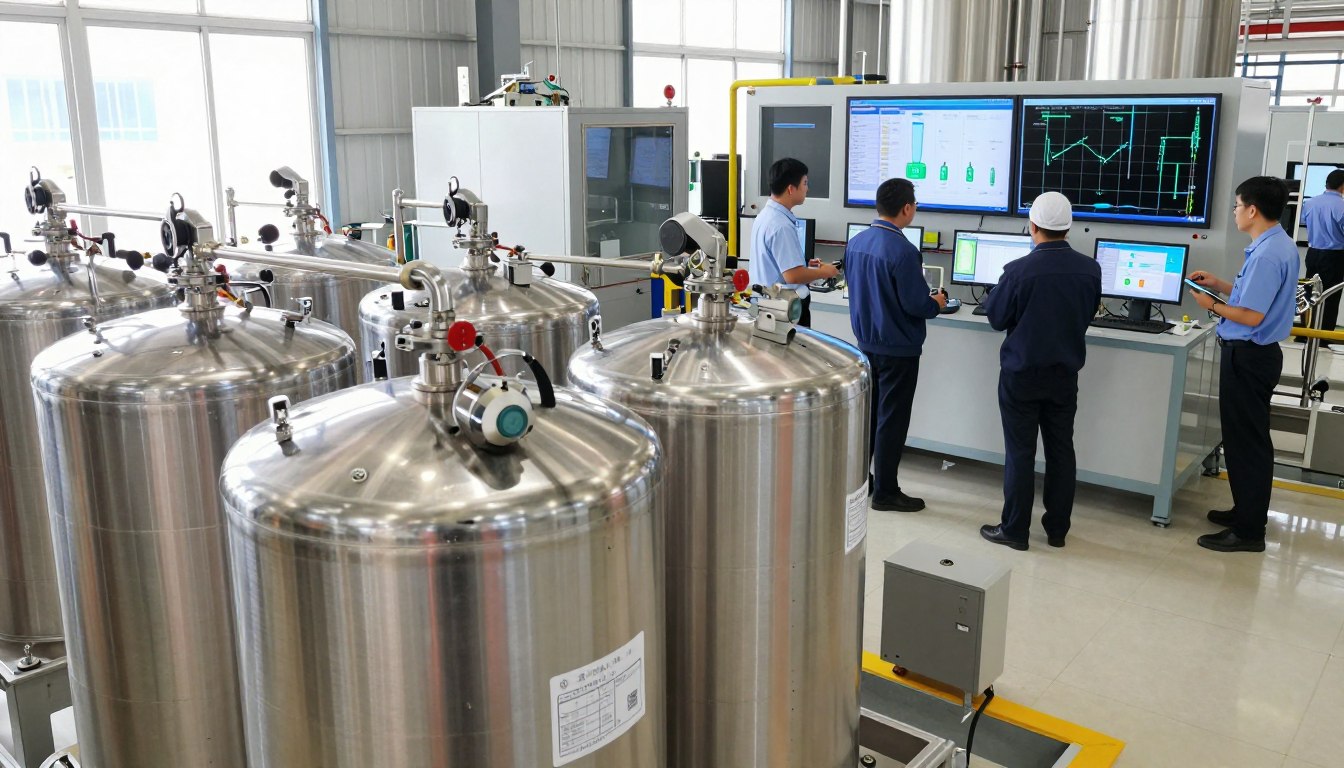
A detailed scene showcasing a state-of-the-art fuel vapor storage facility. In the foreground, metallic cylindrical canisters labeled with certification marks glisten under bright, natural lighting, reflecting their polished surfaces. The middle ground features a well-organized assembly area, where engineers in professional business attire inspect and calibrate the equipment, emphasizing quality control. The background includes high-tech machinery and monitoring screens displaying real-time data related to fuel vapor emissions and storage conditions. The overall atmosphere conveys precision and professionalism, with a slight industrial aesthetic. The camera angle is slightly elevated, providing a comprehensive view of the entire operation, while soft shadows create a sense of depth and focus.
Quality Control Processes and Defect Rates
Good quality control processes are essential for high-quality products and low defect rates. We review the manufacturer's quality control steps, including inspections and material sourcing.
Quality Control Measure | Description | Impact on Defect Rate |
Raw Material Inspection | Strict inspection of raw materials to ensure they meet specifications. | Reduces the likelihood of defects in the final product. |
Production Line Controls | Regular monitoring and control of production processes. | Minimizes variations and defects during production. |
Final Product Testing | Comprehensive testing of finished products against performance and safety standards. | Ensures that only compliant products are shipped to customers. |
Vapor Recovery Canister Performance Testing
Vapor recovery canister performance testing is vital. It checks if the canisters capture and store fuel vapors well. It also tests their durability and performance under different conditions.
We seek manufacturers that do thorough performance testing. This includes tests for vapor storage, purge efficiency, and mechanical strength. Such testing confirms the canisters meet or exceed standards.
Verifying Regulatory Compliance and Industry Standards
To ensure your charcoal canister is top-notch and legal, checking the manufacturer's compliance is key. This means looking at their adherence to industry standards and regulations. These rules govern the making of car emission control parts.
We focus on three main areas. These are EPA Tier 3 and CARB evaporative emission standards, the need for automotive emissions control certifications, and following material safety and environmental rules.
EPA Tier 3 and CARB Evaporative Emission Standards
The EPA Tier 3 and CARB evaporative emission standards are strict rules for vehicle emissions. A charcoal canister maker must show they meet these standards. This ensures their products help keep vehicle emissions under control.
For example, makers selling to the US must follow EPA Tier 3 rules. They go through tough testing and get certified. You can find more about emissions control parts on Alibaba's product insights page.
Automotive Emissions Control Certifications
Charcoal canister makers should also have the right automotive emissions control certifications. These show their products work well in a car's emission system.
Certs from places like the California Air Resources Board (CARB) or ISO 14001 show a maker's dedication to quality and rules.
Material Safety and Environmental Compliance
It's also important to check if the maker follows material safety and environmental regulations. This includes rules on hazardous materials, waste, and environmental management.
Makers who care about the environment and safety are doing more than just following rules. They're helping make the car industry better. It's crucial to pick a supplier who shares these values for a responsible supply chain.
Assessing Production Capacity and Supply Chain Strength
It's key to check a manufacturer's production and supply chain strength. This makes sure they can meet your needs without sacrificing quality or reliability.
Manufacturing Volume and Scalability Options
Knowing the manufacturer's current production volume and scalability is vital. We look at their equipment, technology, and workforce. This helps us see if they can adjust to demand changes.
We also check their production facilities for modernization and technology investment. We look for signs of just-in-time production and their ability to handle various order sizes.
Lead Time Commitments and On-Time Delivery Records
Lead times and delivery reliability are crucial for a smooth production flow. We examine the manufacturer's lead time and delivery history. A reliable supplier is key to avoiding production hiccups.
Performance Metric | Excellent | Good | Fair |
On-Time Delivery Rate | 95-100% | 90-94% | 80-89% |
Lead Time Consistency | Consistently meets quoted lead times | Occasionally misses quoted lead times | Frequently misses quoted lead times |
Geographic Locations and Distribution Networks
The location of the manufacturer and their distribution networks are vital for logistics. A strategically located manufacturer can cut shipping times and costs, improving supply chain efficiency.
We check if their facilities are close to major transportation hubs. This is crucial for effective regional service.
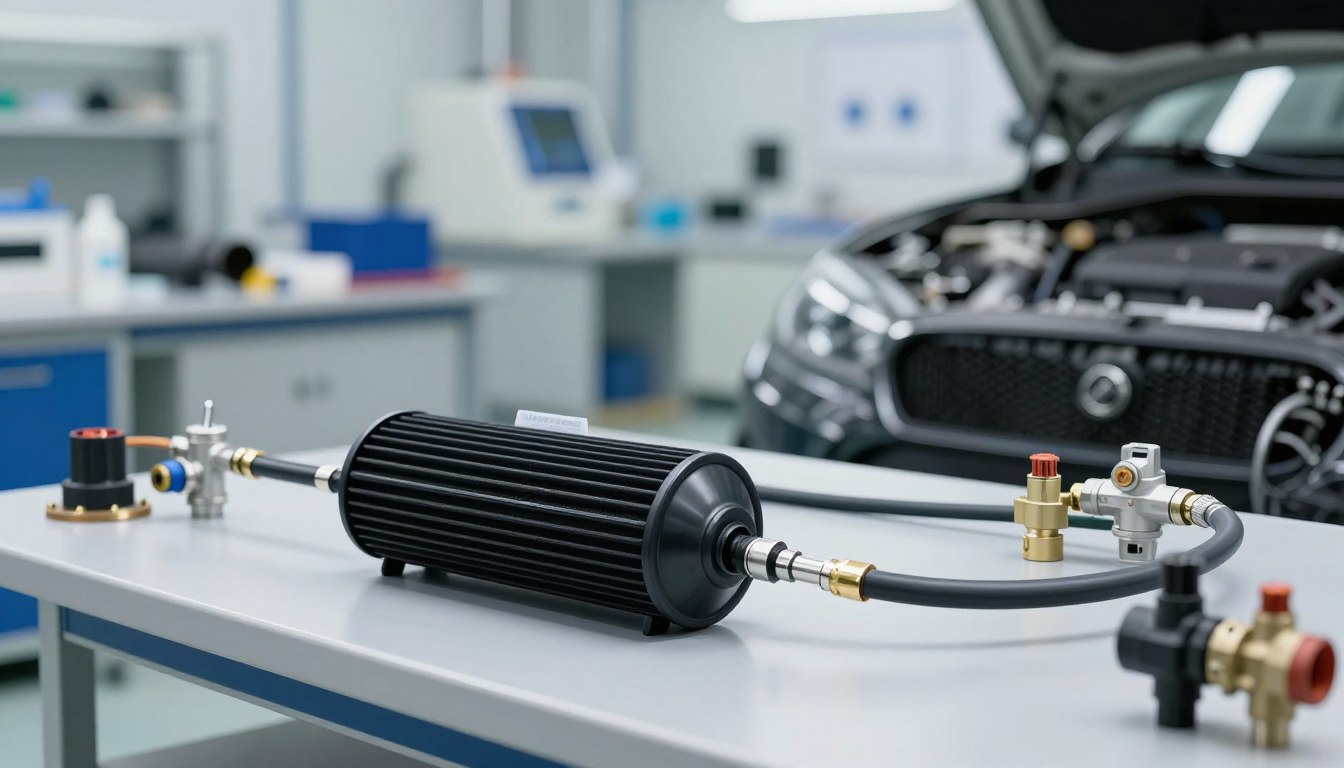
A detailed and technical illustration of an evaporative emissions system, showcasing its key components like the charcoal canister, hoses, and valves in a clean, industrial setting. In the foreground, a charcoal canister is prominently displayed on a sterile workbench, highlighting its intricate design and labels. The middle ground features connected hoses and valves, with one end attached to a vehicle’s fuel system, emphasizing functionality. In the background, softly blurred manufacturing equipment and shelves containing various automotive parts suggest a bustling production facility. The lighting is bright and sterile, simulating a well-lit factory environment. The atmosphere is professional and focused, aimed at conveying attention to detail in the manufacturing and supply chain process.
Contingency Planning and Supply Chain Risk Management
Having contingency plans for supply chain disruptions is essential. We review the manufacturer's risk management strategies. This includes their plans for natural disasters, geopolitical issues, or other disruptions.
A solid risk management plan helps the manufacturer keep supplies flowing, even when things get tough. This protects your production schedule.
Analyzing Technical Support and Engineering Capabilities
A manufacturer's technical skills and support are key to the quality and reliability of their vapor recovery canisters. When looking at potential charcoal canister makers, check their technical support and engineering know-how.
Custom Carbon Canister Design and Development
A good manufacturer should offer custom carbon canister design and development services. They should:
- Work with you to design canisters that fit your needs
- Use advanced tools to improve canister performance
- Choose and test materials to meet standards
For example, a maker skilled in vapor recovery canisters for different vehicles can adjust their designs for you. A report on evaporative emission control shows how important canister design is.
Prototyping Services and Validation Testing
A reliable manufacturer should also offer prototyping services and validation testing. This means they:
- Can make quick prototypes for testing
- Test canisters under various conditions
- Ensure they meet all regulations
Post-Launch Technical Support and Warranty Programs
It's also important to look at the post-launch technical support and warranty programs. A manufacturer that offers strong support and warranties shows they believe in their products.
By examining these technical and engineering aspects, you can choose a manufacturer that meets your needs now and in the future.
Comparing Cost Factors When Selecting a Charcoal Canister Manufacturer
Choosing the right charcoal canister maker is more than just looking at prices. We need to look at many cost factors. These factors affect the total cost of the canisters.
Unit Pricing and Volume-Based Discount Structures
The price per unit of charcoal canisters is key. We must understand the volume-based discount structures offered. Buying in bulk can save a lot of money. It's important to find a price that fits our needs and budget.
For example, a tiered pricing system can offer big discounts for big orders. We should also ask about discounts for long-term deals.
Tooling Costs and Initial Investment Requirements
Tooling costs and initial investment are also important. These costs cover making molds and equipment for the canisters. Knowing these costs helps with budgeting.
Some makers might cover or share these costs. We should think about how these deals affect our costs.
Total Cost of Ownership Beyond Purchase Price
The cost of owning charcoal canisters goes beyond the initial price. We must think about maintenance costs, replacement costs, and emissions testing equipment costs. Choosing durable, quality products can lower these costs over time.
We should also look at the maker's support and warranty programs. These can affect the total cost of ownership.
Contract Terms and Payment Flexibility
Lastly, we need to look at the contract terms and payment flexibility. Flexible payments can help with cash flow. We should find makers with good payment plans and willing to negotiate.
By looking at all these factors, we can make a smart choice. This way, we get the best price and value for our money.
Conclusion
Choosing the right charcoal canister manufacturer is key. It affects your vehicle's performance, meets legal standards, and impacts costs. Look at quality, legal rules, production capacity, technical support, and price. This helps find a good carbon canister supplier for you.
We've provided a guide for OEM buyers to use when looking for a charcoal canister. Use this list to ensure your supplier offers top-notch products. They should comply with regulations and contribute to your business growth.
When selecting a carbon canister supplier, consider their custom solutions, technical expertise, and commitment to quality and support. This will enable you to build a strong partnership and help your business succeed.
FAQ
What should we prioritize when evaluating a potential charcoal canister manufacturer?
When looking at a charcoal canister maker, focus on their ability to produce lots while following emissions rules. It's key to work with a supplier who knows how to meet the needs of big car makers. This ensures they get the complex rules of modern car emissions right.
How do we accurately define our fuel vapor storage requirements?
Start by analyzing your car's engine size and fuel tank. Knowing how much fuel vapor storage you need helps pick the right canister size. Also, knowing where to fit the evaporative emissions system early saves money later.
What manufacturing certifications are essential for quality assurance?
ISO 9001 and IATF 16949 are top certifications for charcoal canister makers. These, along with in-house emissions tests, mean every part meets high safety and performance standards. We also look for low defect rates and clear quality control steps for lasting reliability.
How can we ensure our vehicles remain compliant with EPA Tier 3 and CARB standards?
We check that our suppliers keep up with EPA Tier 3 and CARB emission rules. A good maker will show proof of material safety and environmental rules. This ensures their parts pass all audits for cars like the Chevrolet Silverado or Honda Accord.
How does production capacity affect our supply chain stability?
We look at a maker's ability to grow and their location to reduce risks. A top supplier should be able to adjust production and have backup plans. We choose partners with great delivery records and wide distribution to keep our production running smoothly.
Can we collaborate with a manufacturer on custom carbon canister designs?
Yes, we value makers who offer custom design help. Using quick prototypes and tests, we can make the emission system fit unique cars. This teamwork ensures the canister works perfectly for each vehicle.
What cost factors should we consider beyond the initial purchase price?
We look at the Total Cost of Ownership (TCO). Costs like tooling, initial investment, and warranty support are key. We prefer makers with clear contracts and flexible payment options to keep our budget in check.
Why is the choice of emissions testing equipment so critical for our suppliers?
Suppliers need advanced emissions testing gear for real-world tests. This ensures the emissions system works well in different conditions. It protects our brand and keeps consumers safe.
Contact Us
We are committed to pursuing excellence in every endeavor and look forward to partnering with you for shared success.
Jinhua Hefa Science and Technology Co., Ltd.
Jinhua Hefa Science and Technology Co., Ltd.
Contact Person: Damon Wang
Tel: +86 17280953019
#1569,LinHu RD,JinXi Development Zone,JinHua,ZheJiang Province,PR.China.Post code:321075
About Us
About Us
Home
Home
Contact Us
Contact Us
Products
Products
News
News
Copyright ©️ 2025,Jinhua Hefa Science and Technology Co.,Ltd. All Rights Reserved.
Copyright ©️ 2025,Jinhua Hefa Science and Technology Co.,Ltd. All Rights Reserved.
Phone
Wechat