Jinhua Hefa Science and Technology Co., Ltd.
Jinhua Hefa Science and Technology Co., Ltd.
EVAP Solenoid Valve Supplier Checklist for Packaging and Labeling
Created on 03.16
We are very proud of the evap solenoid valves we send to our clients. Making sure a part works right is more than just making it. It's about top-notch packaging and clear labels too.
evap solenoid valve
We follow strict rules to keep our parts safe during shipping. We focus on regulatory compliance and use strong materials to avoid damage. This way, our customers get their orders in perfect shape.
Having a reliable checklist is key for keeping quality high and trust strong. By sticking to these steps, we ensure every evap solenoid valve meets the standards. Let's explore the important parts of our shipping process.
Key Takeaways
- Protecting product integrity through durable packaging materials.
- Meeting all federal and local regulatory labeling requirements.
- Improving part traceability for faster inventory management.
- Using moisture-resistant barriers to prevent internal corrosion.
- Verifying barcode accuracy to streamline the delivery process.
- Standardizing box dimensions for safer and cheaper shipping.
Understanding the Importance of Proper Packaging and Labeling Standards
Following packaging and labeling standards is key for emission control valves quality. It's not just about keeping the product safe during transport. It also keeps evaporative emission solenoids working well from start to finish.
EVAP solenoid valves face many dangers without proper packaging. These include physical harm, vibrations, and weather damage. Such issues can cause both cosmetic and functional problems, harming the product's quality and trustworthiness.
Impact on Product Quality and Performance
Bad packaging can hurt the quality and function of emission control valves. For example, if packaging can't handle shocks, the evaporative emission solenoid's parts might get damaged. This can shorten the product's life and reliability.
Cost Implications of Inadequate Packaging
Not using good packaging can cost a lot. Damaged items mean expensive fixes and replacements. It also hurts customer trust and loyalty.
Investing in the right packaging and labels can save money. It cuts down on damage risks and keeps products in top shape for customers.
Also, good packaging and labels help with returns and warranties. Correct labeling helps manage stock better and lowers the chance of wrong shipments.
Regulatory Compliance and Certification Requirements
Following regulatory standards is not just a must. It's key to ensuring our EVAP solenoid valves are top-notch. As suppliers, we follow many rules, mainly about vehicle emissions and evap system solenoids.
Our products need to meet strict emissions rules from the Environmental Protection Agency (EPA) and the California Air Resources Board (CARB). These rules help cut down harmful emissions and keep vehicles in check.
EPA and CARB Emissions Control Standards
The EPA and CARB have set tough guidelines for emissions. These rules affect how we design, make, and test our EVAP solenoid valves. We must follow these standards to sell and use our products legally.
Key requirements include:
- Emissions testing and certification
- On-board diagnostics (OBD) system compatibility
- Compliance with specific emissions standards for various vehicle types
ISO Quality Management Certifications
We follow ISO quality management standards to ensure our EVAP solenoid valves are of the highest quality. ISO 9001 certification shows our dedication to quality and customer happiness.
ISO certifications help us by:
- Streamlining processes
- Improving product reliability
- Enhancing customer trust
International Automotive Standards
International automotive standards are also key. They define what EVAP solenoid valves need to meet. One important standard is IATF 16949, which focuses on quality management in the automotive sector.
IATF 16949 Compliance
Meeting IATF 16949 standards is vital for automotive suppliers. It ensures our quality management systems are up to par. This includes advanced planning, defect prevention, and ongoing improvement.
Country-Specific Import Requirements
We also need to follow import rules for each country. These rules can differ a lot. It's important to know and follow these to smoothly bring our EVAP solenoid valves into various markets.
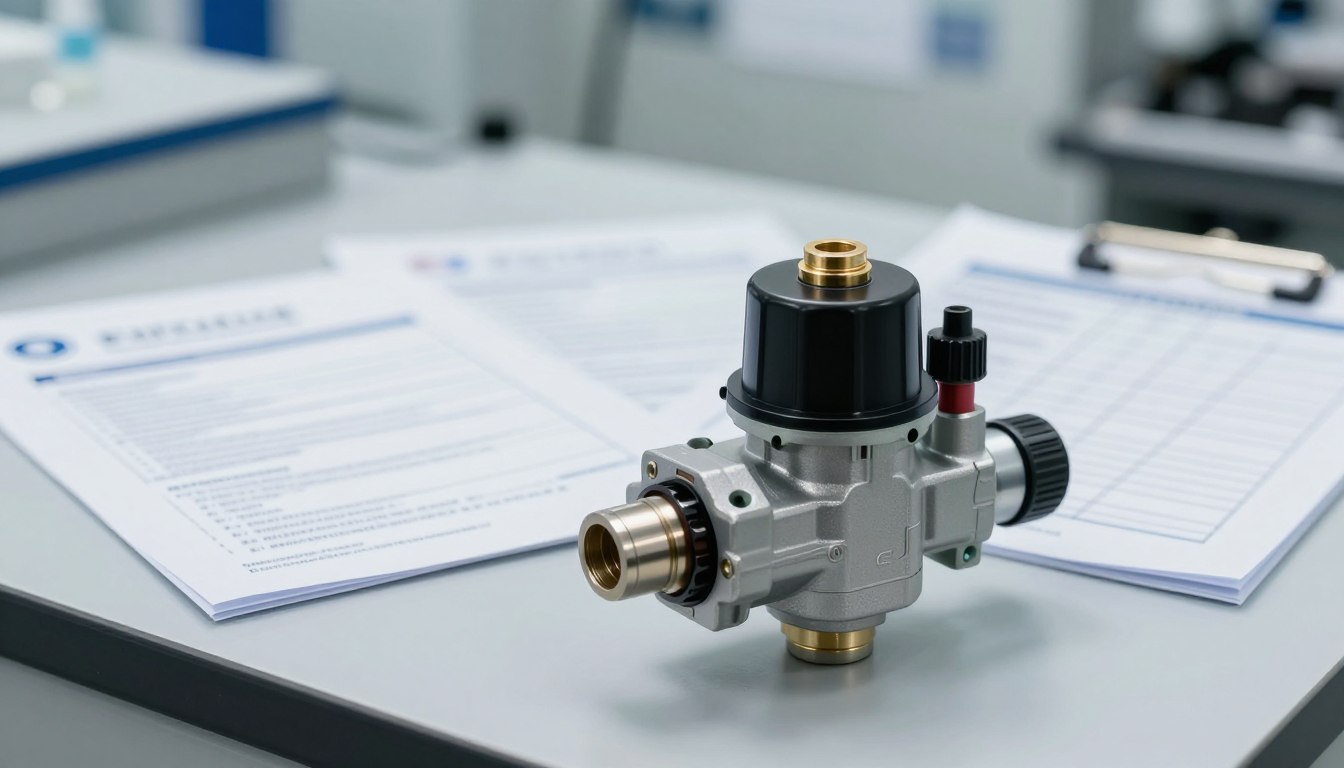
A close-up view of an EVAP system solenoid valve placed on a clean, professional workbench. The foreground features the solenoid valve prominently, showcasing its intricate design with visible wiring and connection points. In the middle ground, include an organized array of compliance certification documents and a compliance checklist, slightly blurred, symbolizing regulatory requirements. The background should feature a laboratory-like setting, with soft, diffused lighting that emphasizes professionalism and clarity. A subtle focus on the technical elements creates a mood of compliance and attention to detail in the automotive industry. Ensure the environment is free of clutter to maintain an organized appearance suitable for an informative article.
By focusing on regulatory compliance and getting the right certifications, we ensure our products are legal and of high quality. This commitment is key to our business and customer satisfaction.
Physical Packaging Protection Standards for Automotive Solenoid Valves
To keep EVAP solenoid valves safe during transport, strict packaging standards are needed. The automotive solenoid valves packaging must handle various stresses well.
Material Selection and Durability Testing
Choosing the right packaging materials is key for car solenoid valves. We need to think about durability, environmental resistance, and compatibility with the valve's parts.
Corrugated Cardboard Specifications
Corrugated cardboard is often used for automotive solenoid valves packaging. It should meet certain thickness, edge crush test, and bursting strength standards. This ensures the valves stay safe during shipping.
Anti-Static Packaging Materials
Anti-static packaging is vital to prevent damage from static electricity for car solenoid valves. Items like anti-static bags, foam inserts, or special packaging can help dissipate static charges.
Moisture Barrier and Seal Integrity
Keeping automotive solenoid valves dry is essential for their performance and life. Packaging must include a moisture barrier to block water and ensure seals stay tight to keep components dry.
Shock and Vibration Protection Measures
Car solenoid valves can be damaged by shock and vibration during transport. To reduce this risk, packaging should use shock-absorbing materials. It should also keep the valves stable, reducing movement and impact.
Critical Labeling Information for EVAP Solenoid Valve Identification
Labeling EVAP solenoid valves correctly is key for keeping inventory right, ensuring parts fit, and tracking products well. Good labeling means these parts are put in the right vehicles. This keeps the emission control system working right.
Technical Specifications Display
The label on an EVAP solenoid valve should show its tech specs clearly. This makes sure it works right and fits the vehicle. Here's what it should include:
- Part Numbers and OEM Cross-References: Showing the part number and matching it with OEM numbers makes finding and replacing parts easy.
- Voltage, Pressure, and Flow Rate Specifications: These details are key for the valve to work as it should in the vehicle's system.
- Compatible Vehicle Applications: Listing the vehicles it fits helps avoid wrong installs and makes managing stock easier.
Manufacturing and Traceability Data
The label also needs to show when and where it was made. This info is for tracking and checking quality. It includes:
- Production Date and Batch Codes: These codes help track parts through the supply chain for quality control.
- Country of Origin Marking: Showing where it was made is important for following rules and for warranty and support.
Barcode and Digital Tracking Systems
Using barcodes and digital systems makes tracking EVAP solenoid valves better. Barcodes hold info like part numbers and batch codes. This makes inventory tracking and checking parts easy.
By using these labeling methods, makers and sellers can make sure EVAP solenoid valves are right, tracked, and managed well. This boosts work efficiency and makes customers happier. It cuts down on wrong installs and makes warranty and support smoother.
Quality Assurance Markings and Testing Certifications
Quality assurance markings and testing certifications are key to proving EVAP solenoid valves work right. They make sure the valves meet standards and give customers confidence in their quality.
We take many steps to ensure quality and get the right certifications. Some important parts include:
Inspection Stamps and Quality Control Indicators
Inspection stamps and quality control indicators help track a product's history. They show it has been checked properly. These signs can be:
- Batch numbers for traceability
- Inspection dates to ensure timeliness
- Quality control stamps to signify approval
Performance Testing Documentation
Testing EVAP solenoid valves is crucial to prove they work well and last long. Our testing documents include:
- Detailed test procedures to ensure consistency
- Test results that verify performance under various conditions
- Certification documents from recognized testing bodies
For more info on valve standards and specs, check our guide on understanding valve standards and specifications.
Material Composition and RoHS Compliance Labels
Material composition and RoHS (Restriction of Hazardous Substances) compliance are key for safety and rules. Our labels and documents show:
- Material composition details to inform about the used materials
- RoHS compliance certification to ensure adherence to environmental regulations
By focusing on quality assurance and testing, we show our dedication to top-notch EVAP solenoid valves. This builds trust with customers and helps vehicle emission systems work better. It might even make solenoid valve replacement easier.
Supplier Documentation and Support Information
We're a trusted supplier of EVAP solenoid valves. We know how important it is to give our customers the right documents and support. This helps them understand our products better and use them effectively.
Warranty Terms and Coverage Details
We back our EVAP solenoid valves with a solid warranty. Our warranty covers parts and labor for a set time. This gives our customers peace of mind and protects their investment.
Our warranty terms are clear and easy to understand. They explain what's covered, for how long, and any conditions that might apply. This builds trust with our customers and shows our commitment to quality.
Warranty Component | Coverage Details | Duration |
Parts | Comprehensive coverage against manufacturing defects | 2 years or 24,000 miles |
Labor | Coverage for labor costs associated with replacement | 2 years or 24,000 miles |
Installation Instructions and Technical Diagrams
We give detailed installation instructions and technical diagrams with each EVAP solenoid valve. These guides are easy to follow, reducing the chance of mistakes during installation.
Our technical diagrams are precise, showing important parts and connections. This helps both technicians and DIY fans ensure our products are installed right and work as they should.
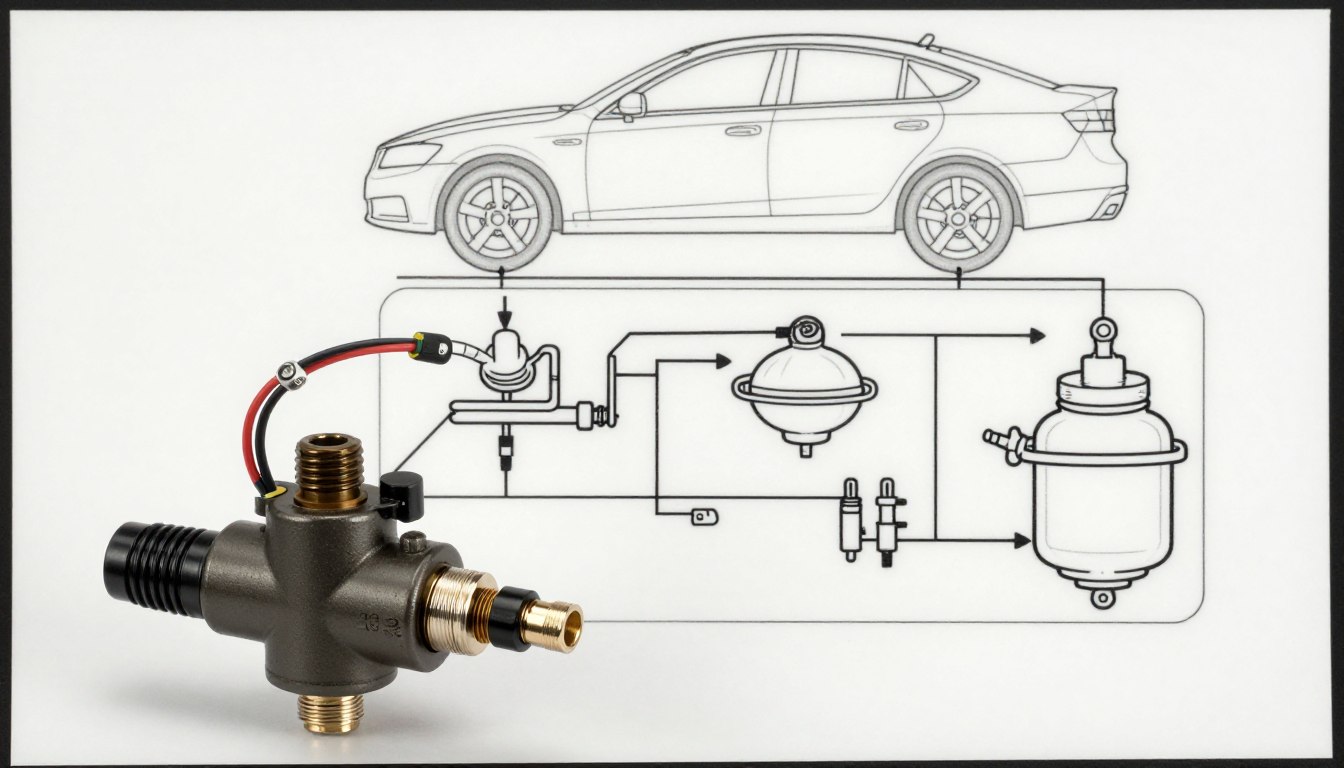
An accurate and detailed installation diagram of an EVAP solenoid valve, showcasing its components and connections. In the foreground, clearly illustrate the solenoid valve itself with labeled fittings, wires, and connectors. The middle layer should display surrounding components like vacuum lines and evap canister placements, ensuring clarity in their relations to the solenoid. The background includes a schematic representation of a vehicle’s fuel system to provide context. The diagram should use a clean, technical style with crisp lines and a professional layout, illuminated with soft, even lighting to enhance visibility. The atmosphere is informative and educational, aimed at providing precise technical knowledge without any text or annotations.
Supplier Contact Information and Support Resources
We offer ongoing support to our customers. We make our contact info easy to find. Whether you have questions or need help, our team is ready to assist.
Customer Service Contact Details
Our customer service team is here to help with any questions or concerns. You can contact us by phone, email, or through our website's contact form. We're known for our responsive and friendly customer service, making every interaction positive.
Technical Support Availability
For technical questions or issues with our EVAP solenoid valves, our technical support team is ready to help. We offer support through phone, email, and online resources. This ensures help is always available.
- Phone: Available during business hours
- Email: Responses within 24 hours
- Online Resources: FAQs, manuals, and troubleshooting guides available on our website
Shipping Labels and Handling Instructions for Vehicle Emission System Components
Handling and shipping EVAP solenoid valves right is key to keeping them working well in vehicle emission systems. We must follow strict rules to avoid damage and meet legal standards.
Using the right shipping labels and handling tips is very important. These labels show how to handle the parts safely during transport.
Fragile Item Indicators and Orientation Arrows
To avoid damage, we put fragile item indicators and orientation arrows on the boxes. These signs tell handlers about the parts' sensitivity and how to ship them correctly.
Stacking Limits and Storage Condition Requirements
It's also important to think about stacking limits and storage condition requirements. We set limits on how many boxes can be stacked and what conditions they should be stored in.
Temperature and Humidity Specifications
For the best storage, we suggest keeping the temperature between 60°F and 80°F (15°C and 27°C). Also, keep the humidity below 60%. These conditions help protect the parts.
Maximum Stacking Weight
The maximum stacking weight is also a big deal. We set this limit to prevent too much pressure on the bottom packages. This could harm the EVAP solenoid valves inside.
Package Type | Maximum Stacking Weight (lbs) | Recommended Storage Temperature (°F) |
Standard Package | 50 | 60-80 |
Heavy-Duty Package | 100 | 60-80 |
Hazardous Material Declarations
For EVAP solenoid valves with hazardous materials, we must follow rules on hazardous material declarations. We label the packages with hazard warnings and include documents about the hazardous materials. For more info, see the SORE FAQ document.
Conclusion
Proper packaging and labeling of EVAP solenoid valves are key for their quality and performance. By following the checklist in this article, we make sure our products meet standards. This way, we deliver them to our customers in the best condition.
We've stressed the need for following regulations, protecting the physical packaging, and including important labels. We also focus on quality assurance and supplier documentation. These steps help us keep our quality high and our customers happy.
By focusing on the right packaging and labeling, we avoid damage. We also meet regulations and give our customers the info they need. This helps them install and keep these important parts working well.
FAQ
Why do we prioritize specialized packaging for every evap solenoid valve we ship?
We focus on top-notch packaging because an evaporative emission solenoid is a delicate piece. If it gets damaged during shipping, it can fail right away. Our strict packaging keeps it safe and saves our customers from costly repairs.
Which regulatory certifications do our emission control valve products carry?
Our products meet EPA and CARB emissions standards. We follow IATF 16949 and have ISO Quality Management Certifications. This makes sure our evap system solenoids are legal and work well worldwide.
How do we protect an automotive solenoid valve from environmental damage during shipping?
We use special packaging to keep the electronics safe. This includes anti-static materials and moisture barriers. We also use strong cardboard to protect against shock and vibration.
What specific information can you find on our product labels?
Our labels have all the important details. You'll see voltage, pressure, and flow rate specs. Plus, OEM cross-references and production info for easy tracking.
How do we demonstrate our commitment to quality assurance and RoHS compliance?
We show our quality with clear indicators and stamps on each valve. We also provide performance testing data and ensure all materials are RoHS compliant. This proves our components are safe and meet global standards.
What resources do we provide to assist with a solenoid valve replacement?
We support our customers with detailed instructions and diagrams. We also offer warranty information and have a team ready to help with any issues.
What are the mandatory handling instructions for shipping these vehicle emission system components?
We use special indicators and arrows to guide handling. We also set limits on stacking and specify temperature and humidity needs. This keeps the solenoid safe during transport.
Contact Us
We are committed to pursuing excellence in every endeavor and look forward to partnering with you for shared success.
Jinhua Hefa Science and Technology Co., Ltd.
Jinhua Hefa Science and Technology Co., Ltd.
Contact Person: Damon Wang
Tel: +86 17280953019
#1569,LinHu RD,JinXi Development Zone,JinHua,ZheJiang Province,PR.China.Post code:321075
About Us
About Us
Home
Home
Contact Us
Contact Us
Products
Products
News
News
Copyright ©️ 2025,Jinhua Hefa Science and Technology Co.,Ltd. All Rights Reserved.
Copyright ©️ 2025,Jinhua Hefa Science and Technology Co.,Ltd. All Rights Reserved.
Phone
Wechat