Jinhua Hefa Science and Technology Co., Ltd.
Jinhua Hefa Science and Technology Co., Ltd.
EVAP Canister Vent Valve Wholesale: What to Confirm on Specs
Created on 03.16
Finding the right parts for your business shouldn't be hard. We know precision is key when looking for top-notch automotive emission solutions. Checking technical specs early saves time and avoids costly mistakes later.
We are dedicated to providing the clarity you need to succeed in a competitive market.
evap canister vent valve
When buying parts in bulk, checking technical details is crucial. We'll guide you through verifying the right data for a smooth process. Our team believes in precision and wants to help you choose the best for your inventory.
Key Takeaways
- Verify specific vehicle fitment requirements for every order.
- Inspect electrical connector pins for total compatibility.
- Confirm material quality for long-term component durability.
- Review environmental compliance standards for your specific region.
- Check bulk order warranty terms and return policies.
- Assess shipping timelines to maintain your inventory levels properly.
Understanding the EVAP Canister Vent Valve in Emission Control Systems
It's key to know how the EVAP canister vent valve works for a good emission control system. This valve is vital in keeping harmful fuel vapors out of the air.
The Role of the Vent Valve in Evaporative Emission Control Systems
The vent valve is crucial in the evaporative emission control system. It controls fuel vapor flow from the tank to the engine. It opens and closes to let vapors through or block them, based on the car's state.
This valve keeps the balance between storing and purging fuel vapors. The system captures and recycles fuel vapors to avoid them being released into the air. The vent valve makes sure this process works well.
How Vent Valves Prevent Fuel Vapor Leaks
Vent valves stop fuel vapor leaks by sealing the tank and managing vapor flow to the engine. This action cuts down emissions and keeps fuel efficiency high. A bad vent valve can cause leaks, leading to more emissions and possibly the check engine light.
Condition | Consequence |
Faulty Vent Valve | Increased Emissions |
Leaking Fuel Vapors | Reduced Fuel Efficiency |
Check Engine Light | Potential for Further Engine Damage |
Common Failure Points That Drive Replacement Demand
Issues like clogging, electrical problems, or mechanical failure can make the vent valve fail. Regular checks and maintenance can spot these problems early.
If the vent valve breaks down, it can cause fuel efficiency to drop and emissions to rise. Knowing where these failures often happen helps in fixing them fast.
Critical Material and Construction Specifications
Material and construction are key to the EVAP canister vent valve's reliability and life span. The valve must prevent fuel vapor leaks and keep the emission control system working right. This depends on the quality of materials and how it's built.
Choosing the right EVAP canister vent valve is crucial. Experts say the materials used affect how long it lasts and how well it stops fuel vapor leaks.
"The quality of materials used in the construction of the EVAP canister vent valve directly impacts its operational lifespan and effectiveness in preventing fuel vapor leaks."
Industry Expert
Housing Material Requirements for Long-Term Durability
The housing of the EVAP canister vent valve needs to be tough. It must handle extreme temperatures and chemicals well. High-grade plastics or metals are often used because they resist corrosion and last long.
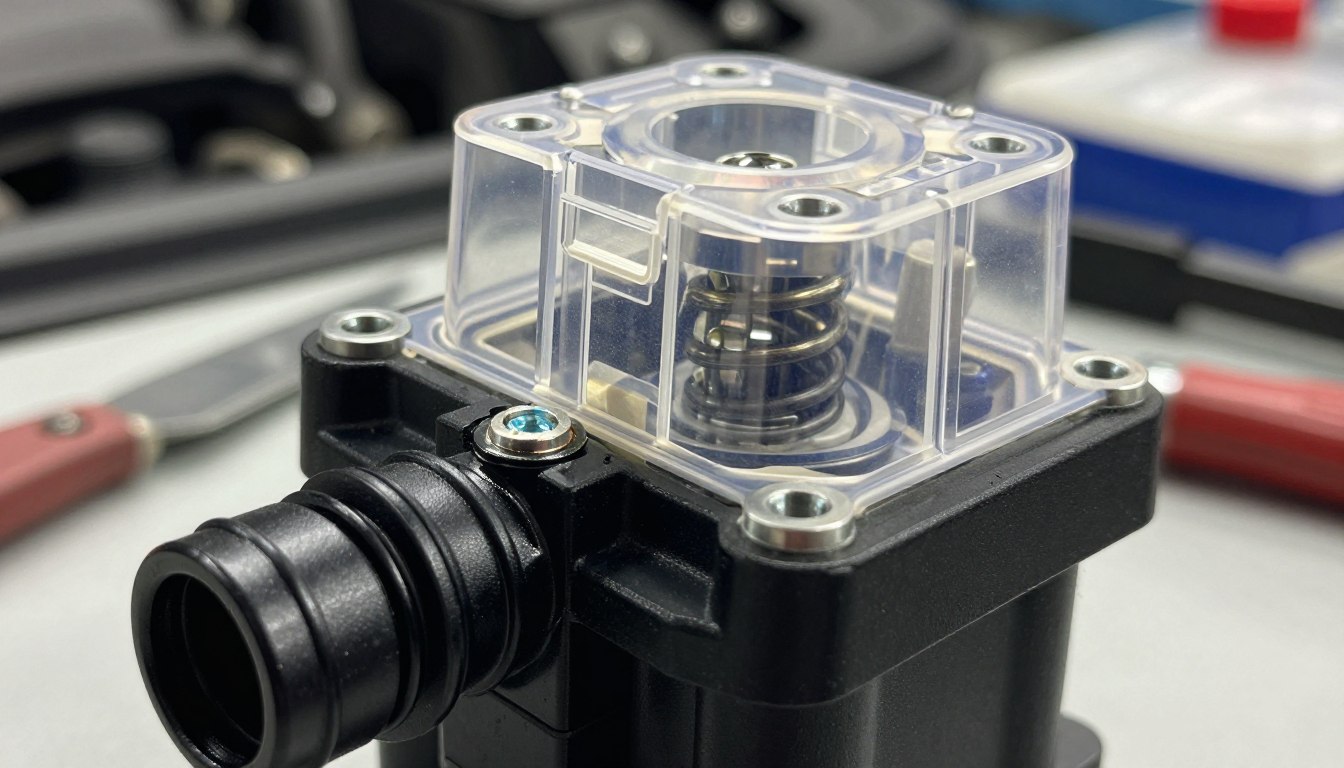
Close-up view of an EVAP canister vent valve, showcasing its intricate material construction and design. In the foreground, a polished black plastic component reveals detailed textures and ribbed surfaces, with metallic parts like screws and seals highlighted for clarity. The middle layer features a transparent plastic housing, allowing viewers to see the internal mechanisms, such as diaphragm and spring assemblies, designed to regulate vapor flow. The background is a blurred image of an automotive workshop, with tools and equipment subtly indicated, creating a technical atmosphere. Bright, diffuse lighting enhances the details of the valve, with a slight focus on the reflections on the plastic and metallic surfaces. The overall mood is professional and informative, emphasizing precision engineering and quality materials.
Seal and Diaphragm Component Standards
The seal and diaphragm parts are key to stopping fuel vapor leaks. They must be made to resist fuel vapors and stay strong over time. These parts need to withstand chemicals and work well in different temperatures.
Corrosion Resistance and Environmental Protection Ratings
Corrosion resistance is crucial for the EVAP canister vent valve's life, mainly in wet or salty environments. Ratings like IP67 show how well the valve protects against solid particles and water. This ensures it works well in many conditions.
By paying attention to these important material and construction details, makers can create EVAP canister vent valves that meet high standards. This leads to better performance, less emissions, and more reliable vehicles.
Electrical Specifications to Verify Before Purchase
The electrical specs of an EVAP canister vent valve are key. They show if the valve fits and works well in your car. It's important to match these specs with your car's needs for the valve to work right and for evap system repair to be effective.
Voltage and Amperage Operating Parameters
The voltage and amperage specs are basic but crucial. The valve must run on the voltage your car uses, usually between 12V and 24V. This is common for most cars.
The amperage draw also matters. It should not overload your car's electrical system. Always check these specs against your car's to make sure they match.
Solenoid Resistance Measurements
The solenoid resistance is another important spec. It affects how the valve works and if it fits with your car's electrical system.
If the solenoid resistance is off, the valve might not work right or could damage the electrical circuit. So, it's key to check that the solenoid resistance of the EVAP canister vent valve matches what your car's maker says.
Connector Type and Terminal Configuration
The type of connector and how the terminals are set up are also important. The connector must fit with your car's wiring, and the terminals must match your car's electrical system needs.
Getting this right is important for a smooth connection and for the EVAP canister vent valve to work as it should.
Wiring Harness Compatibility
Lastly, the wiring harness must be compatible. The EVAP canister vent valve's wiring harness should fit with your car's wiring system.
This means the connectors, wiring gauge, and insulation type must match. Making sure the wiring harness is compatible makes installation easier and avoids electrical problems.
To wrap up, when checking the electrical specs of an EVAP canister vent valve, focus on these main points:
- Voltage and amperage operating parameters
- Solenoid resistance measurements
- Connector type and terminal configuration
- Wiring harness compatibility
By carefully looking at these specs, you can make sure the EVAP canister vent valve works well and efficiently in your car's emission control system.
Vehicle Compatibility and Fitment Requirements
We know how important it is to check if the EVAP canister vent valve fits your car. Making sure it's the right part is key to keeping your car's emissions system working right.
When you're looking to replace the EVAP canister vent valve, there are a few things to think about. You need to match the OEM part number, check if it fits your car's year, make, and model, and look at the mounting and port sizes. Also, make sure the hose connections are the right size and type.
OEM Part Number Cross-Reference Verification
First, you should match the OEM part number of the EVAP canister vent valve. This makes sure the new part is the same as the old one. For example, if you have a Honda Accord, you can find the right part by checking the OEM number.
Year, Make, and Model Application Coverage
Next, you need to make sure the EVAP canister vent valve fits your car's year, make, and model. You can find this info in the product description or by talking to the supplier.
Mounting Configuration and Port Dimensions
The mounting and port sizes of the EVAP canister vent valve also need to match your car. Check the mounting brackets and clips, and make sure the port sizes are correct.
Hose Connection Size and Type
Lastly, you must check that the hose connections of the EVAP canister vent valve fit your car's setup. Look at the hose diameter and type to ensure a tight and leak-free connection.
Some important things to check for compatibility include:
- OEM part number verification
- Year, make, and model application coverage
- Mounting configuration and port dimensions
- Hose connection size and type
By checking these factors, you can make sure the EVAP canister vent valve fits your car right. This keeps your emissions system working well and avoids any problems.
Performance Parameters for EVAP Canister Vent Valve Reliability
For a reliable EVAP system, knowing the canister vent valve's performance is key. The valve's reliability depends on several important parameters. These ensure it works well in the EVAP system.
These parameters are crucial for evap system maintenance. They affect the valve's ability to work right under different conditions. A good EVAP canister vent valve stops fuel vapor leaks and meets emission standards.
Flow Rate Specifications and Pressure Ratings
The EVAP canister vent valve needs to meet certain flow rate specifications. It also must handle specific pressure ratings without failing or leaking.
Manufacturers set these standards based on the vehicle's design and needs. It's important for the valve to meet these specs to keep the EVAP system working well.
Seal Integrity and Leak Detection Standards
Keeping the seal integrity of the EVAP canister vent valve is crucial. Any leaks can cause fuel vapor to escape. This might trigger check engine lights due to leak detection system alerts.
The valve must meet strict leak detection standards to avoid these problems. Regular checks and inspections are needed to keep the seal strong and working right.
Operating Temperature Range Requirements
The EVAP canister vent valve faces many temperatures during use. It must work well within a certain temperature range.
This ensures the valve works right in both hot and cold. It keeps the EVAP system's performance and reliability steady.
Response Time and Cycle Life Expectations
The response time of the EVAP canister vent valve is very important. It must open and close quickly in response to signals. Also, it has a cycle life, showing how many times it can work before needing a replacement.
A valve with a long cycle life and fast response time makes the EVAP system more efficient and reliable. This supports good evap system maintenance.
Quality Certifications and Compliance Standards
When looking for EVAP canister vent valves, it's key to check their quality certifications. At our company, we know how important these are. They make sure the emission control systems work well, which is crucial for car emission services.
These standards help us follow the rules and ensure the parts last long. We'll look at the main certifications and standards for EVAP canister vent valves.
EPA Emission Control System Requirements
The Environmental Protection Agency (EPA) has strict rules for emission control systems. This includes the EVAP canister vent valve. These rules help keep emissions low and meet environmental standards.
To meet EPA rules, EVAP canister vent valves go through tough tests. They check for leaks, flow rate, and how fast they respond, among other things.
A detailed illustration of an EPA Emission Control System Requirements diagram, prominently featuring the EVAP canister vent valve as the focal point. In the foreground, show the vent valve detailed with labeled components like the diaphragm, electrical connector, and filtering system in a sleek, modern design. The midground should include compliance certificates and standards displayed on a professional presentation board, indicating quality assurance in a corporate environment. The background features a clean, well-lit laboratory or workshop setting with tools and diagrams relevant to emission control. Use soft, bright lighting to enhance visibility and highlight the technical features. The atmosphere should convey professionalism and precision, suitable for an engineering or automotive context.
OE Quality Certifications and Testing Protocols
Original Equipment (OE) quality certifications are vital. They make sure EVAP canister vent valves meet vehicle makers' high standards. These certifications involve detailed tests to check how well the parts work under different conditions.
OE quality certifications look at things like how durable the materials are, how well they work electrically, and if they fit with different car systems. Following these standards means the EVAP canister vent valves are dependable and meet what car pros and owners expect.
ISO Standards and Industry Compliance
ISO standards are a guide for quality and following industry rules. For EVAP canister vent valves, ISO 9001 shows a maker's dedication to quality and making customers happy.
Following ISO standards means having strong quality management systems in place. This covers everything from design to delivery. It makes sure EVAP canister vent valves are made to the best standards, helping make emission control systems reliable.
By picking EVAP canister vent valves with these quality certifications and standards, we make sure our car emission services work well. This helps keep our environment cleaner.
Wholesale Procurement Factors for Automotive Emission Solutions
When buying EVAP canister vent valves wholesale, it's key to look at several important factors. We'll help you understand these key points to make sure you get a good deal.
Minimum Order Quantities and Volume Pricing
It's important to know the minimum order quantities (MOQs) and how pricing changes with volume. Suppliers often give better prices for bigger orders. Check these models to find the best deal for your business.
Negotiating with suppliers can lead to better deals, like lower MOQs or better prices, for big or repeat orders.
Warranty Coverage and Defect Return Policies
A good warranty and clear return policy are key to protect your business. Look for suppliers with strong warranties and easy returns.
Make sure you know how long the warranty lasts and what it covers. It should match your business needs.
Technical Documentation and Installation Support
Good technical info and support are crucial for installing EVAP canister vent valves. Suppliers should offer detailed specs, guides, and help for problems.
Check the quality and availability of these resources when choosing a supplier.
Inventory Availability and Shipping Lead Times
It's important that the supplier can deliver on time and has enough stock. Check their inventory and lead times to avoid delays or stockouts.
Supplier Reputation in EVAP System Maintenance Parts
The supplier's reputation in EVAP parts is a big factor. Look into their history, customer feedback, and ratings. A reputable supplier offers quality products and good service.
Conclusion
Understanding the EVAP canister vent valve's role in your car's system is key. It helps keep your car's emissions in check. Make sure to check the specs, like material and electrical needs, to keep everything running right.
When looking for EVAP canister vent valves, consider quality, car fit, and the supplier's reputation. This helps you pick a reliable part that meets all the rules and keeps your car running well.
We want to help you understand how to deal with car emission solutions. This way, your car will run smoothly and meet all the rules. The right EVAP canister vent valve keeps your car's emissions system working well, avoiding leaks and other problems.
FAQ
What is the primary role of the evap canister vent valve in a modern emission control system?
The evap canister vent valve is key in the evaporative emission control system. It lets fresh air into the canister during the purge cycle. This helps move fuel vapors into the engine to be burned.
By working right, it stops fuel vapor leaks. This keeps your vehicle eco-friendly and meets standards from Ford or Chevrolet.
What are the most common signs that we need to replace vent valve components?
Common signs include a "Check Engine" light, often due to code P0446. You might smell gasoline or struggle to pump gas. These problems usually mean the valve needs fixing.
How can we ensure the electrical specifications match our vehicle during an evap system repair?
In automotive emission solutions, precision is key. Check the solenoid's resistance and the voltage and amperage it needs. Also, make sure the connector type and terminal fit your car's wiring.
Using parts from Bosch or Delphi helps ensure a smooth fit.
What material standards should we look for to ensure long-term durability?
For top car emission services, look for valves made from high-grade materials. The seals and diaphragms must be tough to handle the car's environment.
Choose parts that resist corrosion and can handle extreme temperatures. This ensures they last long without failing.
How do we verify vehicle compatibility and fitment before purchasing wholesale?
As a vehicle emission specialist, we check the OEM part number first. Make sure it fits your car's year, make, and model. Also, confirm the hose size and port dimensions.
This ensures the part fits perfectly without needing risky changes.
What performance parameters define a reliable evap canister vent valve?
A reliable valve meets flow rate and pressure specs. It should pass seal integrity and leak tests to meet EPA emission control system standards. It should also respond quickly and last a long time.
Are these parts compliant with industry quality certifications?
Yes, we choose parts that meet ISO standards and OE quality certifications. This ensures they meet automotive emission solutions standards. This quality keeps your car's emission control system working right and passing emissions tests.
What factors should we consider when choosing a supplier for wholesale automotive emission solutions?
When picking a supplier, look beyond price. Consider minimum orders, volume pricing, and warranty and return policies. A good supplier should have a strong reputation in evap system maintenance and offer support and documentation.
Contact Us
We are committed to pursuing excellence in every endeavor and look forward to partnering with you for shared success.
Jinhua Hefa Science and Technology Co., Ltd.
Jinhua Hefa Science and Technology Co., Ltd.
Contact Person: Damon Wang
Tel: +86 17280953019
#1569,LinHu RD,JinXi Development Zone,JinHua,ZheJiang Province,PR.China.Post code:321075
About Us
About Us
Home
Home
Contact Us
Contact Us
Products
Products
News
News
Copyright ©️ 2025,Jinhua Hefa Science and Technology Co.,Ltd. All Rights Reserved.
Copyright ©️ 2025,Jinhua Hefa Science and Technology Co.,Ltd. All Rights Reserved.
Phone
Wechat